
Subway: Digital Transformation at Global Scale
Rebuilding Subway's digital ordering platform, modernizing in-restaurant point-of-sale, and automating menu operations across nearly 37,000 locations worldwide.
Results
- Digital sales tripled from 2019 to 2022, with continued double-digit year-over-year growth
- Automated menu publishing eliminated an estimated 1.2 million manual updates per year
- Modernized POS experience across thousands of franchise locations worldwide
Context
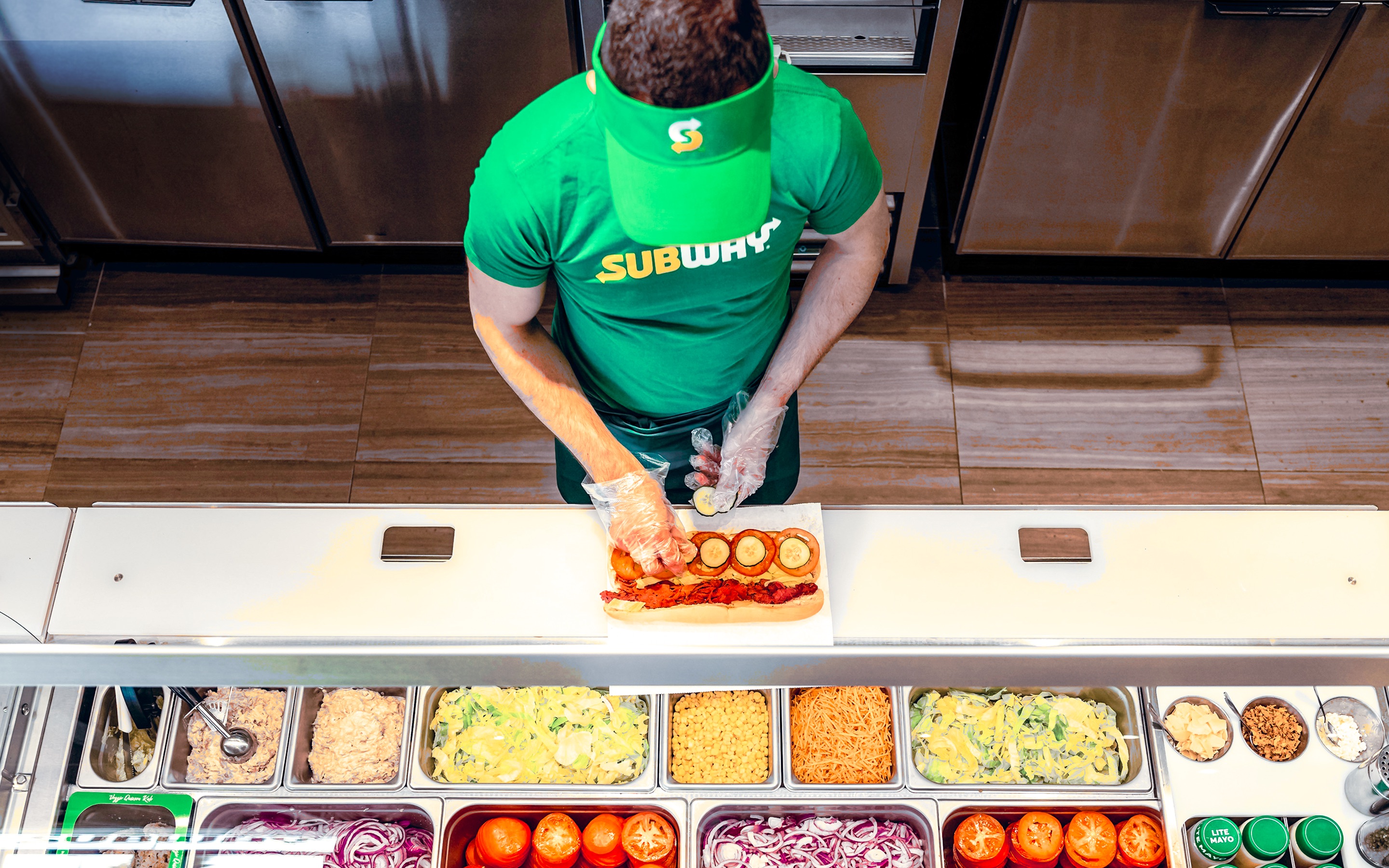
Subway is one of the world’s largest quick-service restaurant brands, serving millions of guests daily across nearly 37,000 restaurants in more than 100 countries. The company embarked on a multi-year transformation to build a better Subway — a comprehensive effort spanning food quality, operational excellence, digital access, and franchise development. As part of that journey, Subway selected Capgemini as its strategic digital transformation partner to rethink how technology supports both guests and the thousands of independent franchisees who operate the business.
I was involved in this engagement through Capgemini, where the challenge was not just building better software but reshaping how a massive franchise network thinks about and adopts technology. In a system where every restaurant is independently owned, technology decisions carry operational, financial, and cultural weight that goes far beyond the code.
Challenge
Subway’s digital platform had been built for the North American business, but it was never architected for international scale. The app, website, and underlying infrastructure were not designed to support the complexity of operating across dozens of countries with different languages, currencies, tax rules, and menu configurations. When COVID-19 hit, those limitations became urgent — the company needed to stand up curbside pickup and shift digital ordering from a convenience feature to the primary channel for the business, and the existing stack was not fit for that purpose.
The in-restaurant technology presented a different but equally complex set of problems. Subway’s proprietary point-of-sale system and menu platform handled the majority of sales, but the interface was aging. Franchisees — who are notoriously demanding critics of corporate technology — reported low satisfaction. Menu updates were a particular pain point: with roughly 30 menu changes per year across thousands of locations, the system required an estimated 1.2 million manual updates annually. Franchisees had to push each change themselves, often across multiple locations. The result was predictable — many franchisees simply did not publish new promotions, meaning guests would see an advertised offer that their local restaurant could not fulfill.
The out-of-stock workflow was similarly broken. If a restaurant ran out of a protein, the franchisee had to manually remove every sandwich containing that protein from the menu, then repeat the process across every digital platform where orders could be placed. In an industry dealing with ongoing supply-chain disruption, this was a daily source of friction.
Approach
The digital transformation moved on two parallel tracks: rebuilding the guest-facing digital platform and modernizing the in-restaurant technology stack.
Digital Platform Rebuild. The team refactored the mobile app and website from the ground up, designing digital ordering as the primary channel rather than a bolt-on to the in-store experience. The new platform was architected for international expansion from day one, with a flexible API layer that could accommodate regional variations in menu, pricing, promotions, and payment methods. Direct integration with the point-of-sale system meant that digital orders appeared to restaurant staff as just another order in the queue — no separate workflow, no additional hardware, no friction at the handoff between digital and physical.
The catering business received its own overhaul, including a simplified online ordering experience with new quick-order options designed to reduce the time between “I need to feed 20 people” and “order confirmed.” Subway also began piloting fully unattended smart fridges stocked daily by nearby franchise locations — extending the brand’s reach beyond the traditional restaurant footprint.
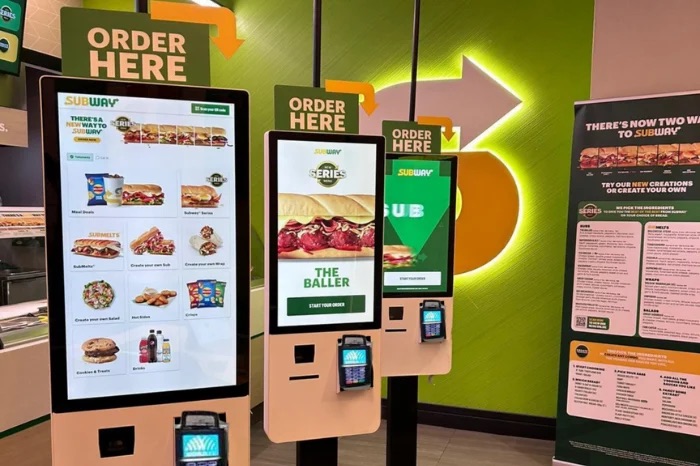
POS and Menu Platform Modernization. The point-of-sale refresh focused on making the interface intuitive for a workforce that had grown up using tablets and smartphones. The legacy system’s interaction patterns did not match the mental models of digital-native sandwich artists, leading to longer training times and higher error rates. The refreshed UX brought the POS experience closer to consumer app conventions — faster to learn, easier to navigate during peak hours.
The most operationally impactful change was automated menu publishing. The new system pushed menu changes, promotions, and pricing updates directly to restaurant systems without requiring manual intervention. Franchisees retained full control — they could accept changes, adjust pricing, and modify options for their specific locations — but the default path became automatic rather than manual. This single change eliminated the 1.2 million annual manual updates and ensured that new promotions were live across all locations from day one.
The out-of-stock workflow was similarly streamlined. A franchisee could now mark a single ingredient as unavailable, and the system would automatically cascade that change across every menu item and every digital platform. What had been a tedious, error-prone process became a single action.
Results
The transformation delivered measurable results across every dimension. Digital sales tripled between 2019 and 2022, with double-digit growth continuing year over year. Guest satisfaction metrics rose consistently, driven by a combination of convenience, speed, and the sense of control that digital ordering provides. Franchise sales increased as the improved technology removed friction from daily operations and ensured promotions were consistently available.
Technology satisfaction among franchisees — historically a difficult metric to move in any franchise system — began rising as the cumulative effect of POS improvements, automated menu publishing, and streamlined out-of-stock management reduced the daily administrative burden. The menu auto-publish capability alone freed franchisees to focus on food and service rather than data entry.
The engagement demonstrated something important about digital transformation at franchise scale: the hardest problems are not technical. The APIs, the mobile app, the POS refresh — those are solvable engineering challenges. The real work is understanding the operational reality of thousands of independent business owners and building technology that makes their lives measurably easier. When the technology gets out of the way, franchisees can focus on what matters: making a good sandwich and serving it to a happy guest.
Ready to discuss your project?
We would love to hear about what you are working on.
Let's Talk